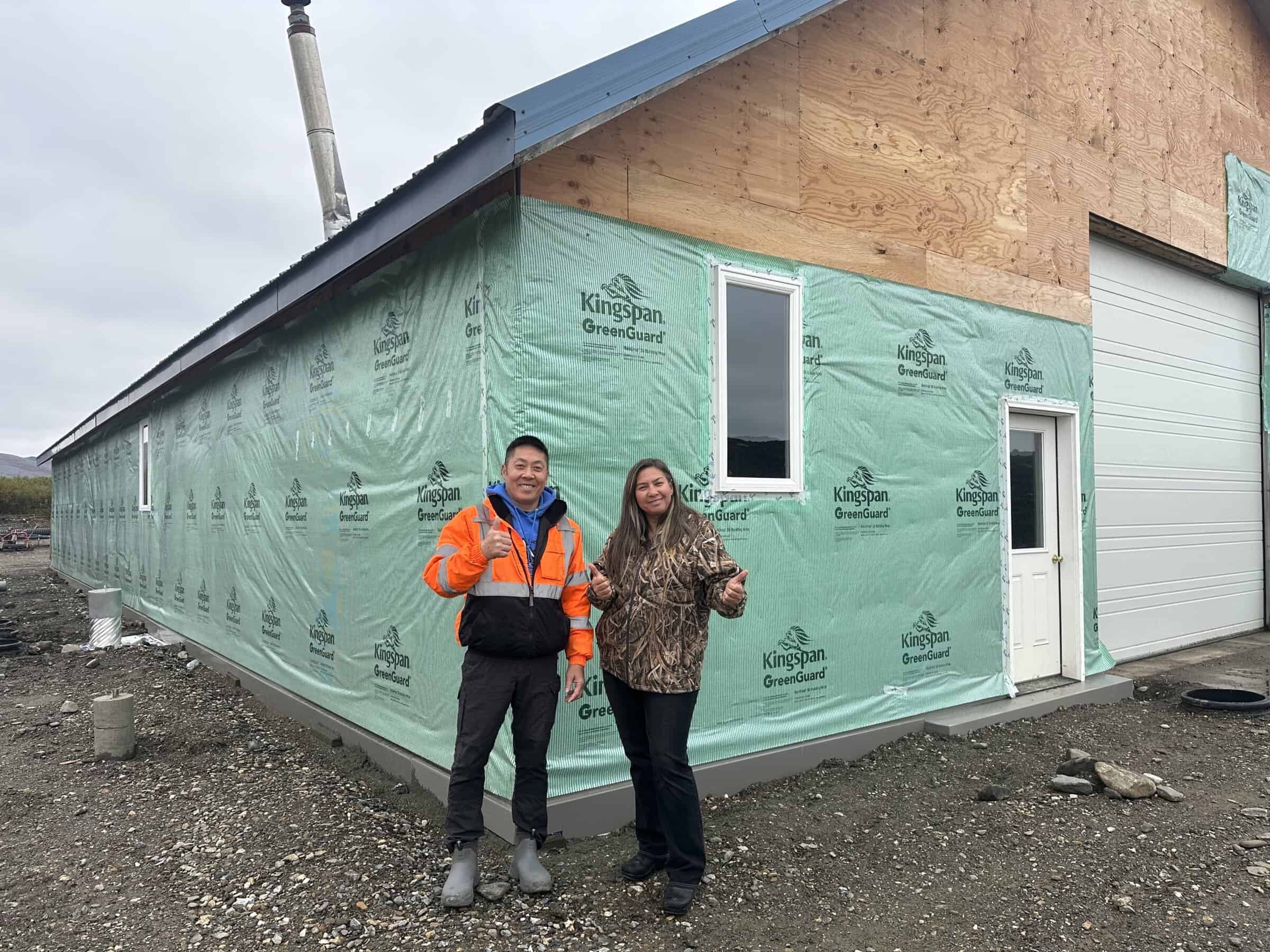
It may not look like much yet, but renovations are underway on Nome’s old monofill building; evidence of a decades-long dream coming to life.
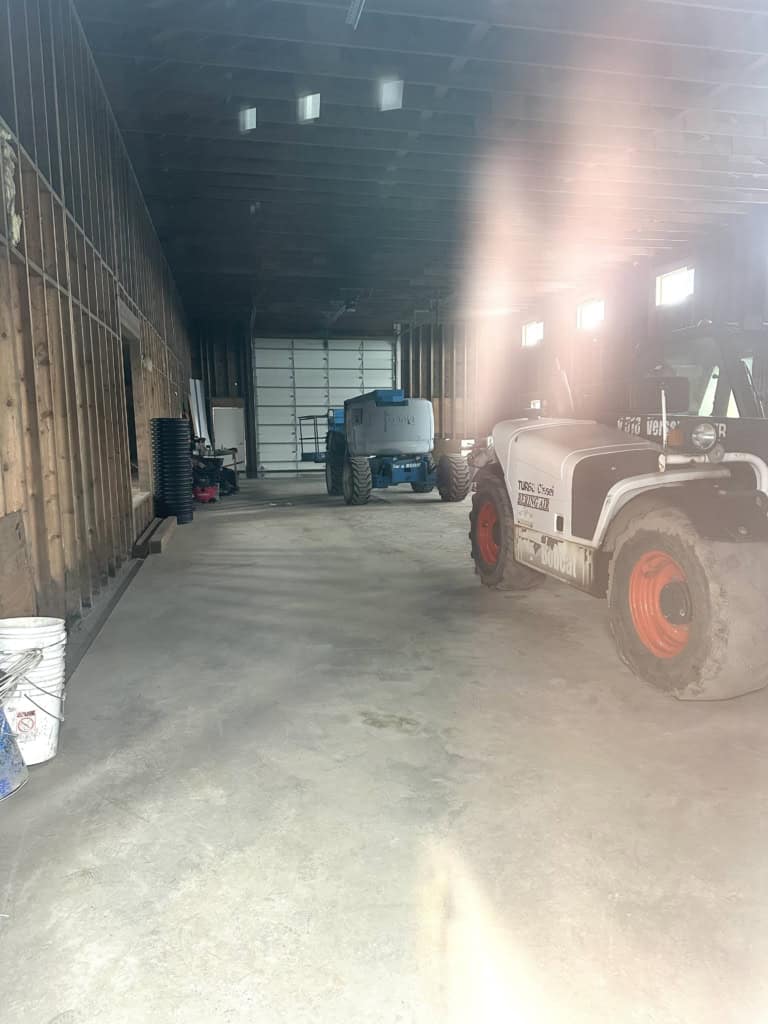
“It definitely makes it feel a lot more real,” said Kawerak’s Environmental Director Anahma Shannon, as she looked over the newly poured concrete floor of the future backhaul/recycling facility.
Shannon, the main driver for the project, spent years thinking about and working toward this step to better manage waste in the Bering Strait region.
“After many years of community engagement and drumming up support, I am just super excited to see this project coming to fruition,” she said.
 Waste in rural Alaska is complicated. Without backhaul and recycling, what comes into the region stays in the region and is either reused or taken to landfills. To manage space, landfills burn waste. And without the quick, hot burn of incinerators, that means plastics, batteries, aluminum, lightbulbs, e-waste, etc. go through a slow burn process, releasing cancer-causing dioxins into our environment. Smoke from these fires can release toxic particles into the air, passing into our homes and into our schools. The waste can filter into the groundwater, potentially contaminating our drinking water. Particles can leach into our rivers, into our fish, into our plants and into the animals that we consume. It all comes full circle.
Over the years, Kawerak’s Environmental Program has worked to learn about waste management processes in communities, to educate and inform, and to listen to community concerns and goals for the future. They hosted community meetings, both Nome and village based. They circulated surveys, collecting feedback on what regional communities want to see for regional recycling and waste removal. It was clear the region wanted more; collectively we have seen firsthand the impacts of the lack of a strong waste management system to our land, water and people. And we want to make a better plan, to care for and keep the land clean for future generations.
And over the past few decades, the Bering Strait region has begun to turn the tide on waste removal. We’ve seen glimpses of what recycling and proper waste disposal progress looks like. We’ve taken steps forward, through regional collaboration, through community education and through the development of opportunities to safely store and remove toxic waste. This growth in interest and regional acknowledgement of the issue has caused larger organizations to take notice and provide support as well.
The monofil building developed as the location for the recycling/backhaul facility through an agreement with the City of Nome. The project also owes big thanks to financial supporters: the EPA SWIFR Grant ($1.5 Million), Norton Sound Health Corporation ($800,000) and NSEDC ($247,100). Without these major investors, the project simply could not have happened.
Taking a walk around the monofill site, the 1980’s building already has a fresh look, thanks to progress with contractor Wolverine Supply. From outside, you see newly installed windows and sheeting, the freshly laid gravel pad, and the completed septic system. With a peek inside, you can see equipment and supplies for construction, the framing for future walls and a concrete floor. One exciting development you can’t see, is the heated floor underneath the concrete. And Shannon said that is the icing on the cake for this project.
Currently, there isn’t a sheltered and heated building in Nome where people can bring their recycling. This limits the ability to collect items from residents and limits staff ability to sort items during the cold winter months. Additionally, Nome’s current recycling facilities limit the quantity and types of materials that can be recycled. Once fully operational, the new building will host an office and a large bay for sorting to increase capacity exponentially. Staff will have space to collect, process and package waste and recyclables. They will be able to accommodate and process a larger quantity and larger assortment of recyclable materials. A multi-use baler will introduce the opportunity to crush industrial amounts of cardboard, aluminum cans, tin, and other products into manageable form to send down south for further processing.
And, while the operation will employ two full-time workers, plans are in the works to offer temporary positions to help with sorting recyclables. Shannon envisions partnering with local organizations to create training and employment opportunities for those in-region in need of community service hours or in need of on-the-job training to build their resume. This will build opportunities for more regular future employment, increasing the skills of our regional workforce.
Once completed, the recycling center will not only be able to better tackle Nome’s waste management issues, but will contribute to recycling and backhaul capacity region-wide, benefiting all communities in the Bering Strait region.