During Typhoon Merbok, many Bering Strait Region communities experienced severe flooding. Communities scrambled to protect life and property, but also had another post-disaster problem to face. The flooding contaminated community fresh water sources and damaged delivery systems, which resulted in boil water orders from the State Environmental Protection Agency. In some communities, boil-water orders lasted most of the 2022/2023 winter, forcing residents to melt snow and ice before boiling it for safe drinking and cooking.
As an assistance measure, Kawerak and other organizations started donating bottled water to temporarily relieve this need. However, as we know, disposable water containers not only come at a cost to the pocketbook, but to the environment as well. On average, a case of 12, 20oz. water bottles costs about $45.00. For recommended water consumption, one case of water would only last two days for one adult male, and that’s just for drinking. Plastics do not break down in the earth quickly, and will overload the landfill capacity at the local level as well as contribute further to global warming. With the environmental and financial impact, purchasing bottled water was not a long term solution to this problem.
In order to address the immediate and long term need for clean, potable water for every household in the region, in 2023 Kawerak initially focused on the five communities that do not have a community water and sewer system – Teller, Diomede, Wales, Stebbins and Shishmaref. Within those five communities, there are 501 households. Kawerak determined that each house should have a water filter system. To reach that goal, Kawerak received a variety of funds and donations from the BIA and Norton Sound Health Corporation to cover the cost of not only the water filter systems but also for shipping them straight to each community.
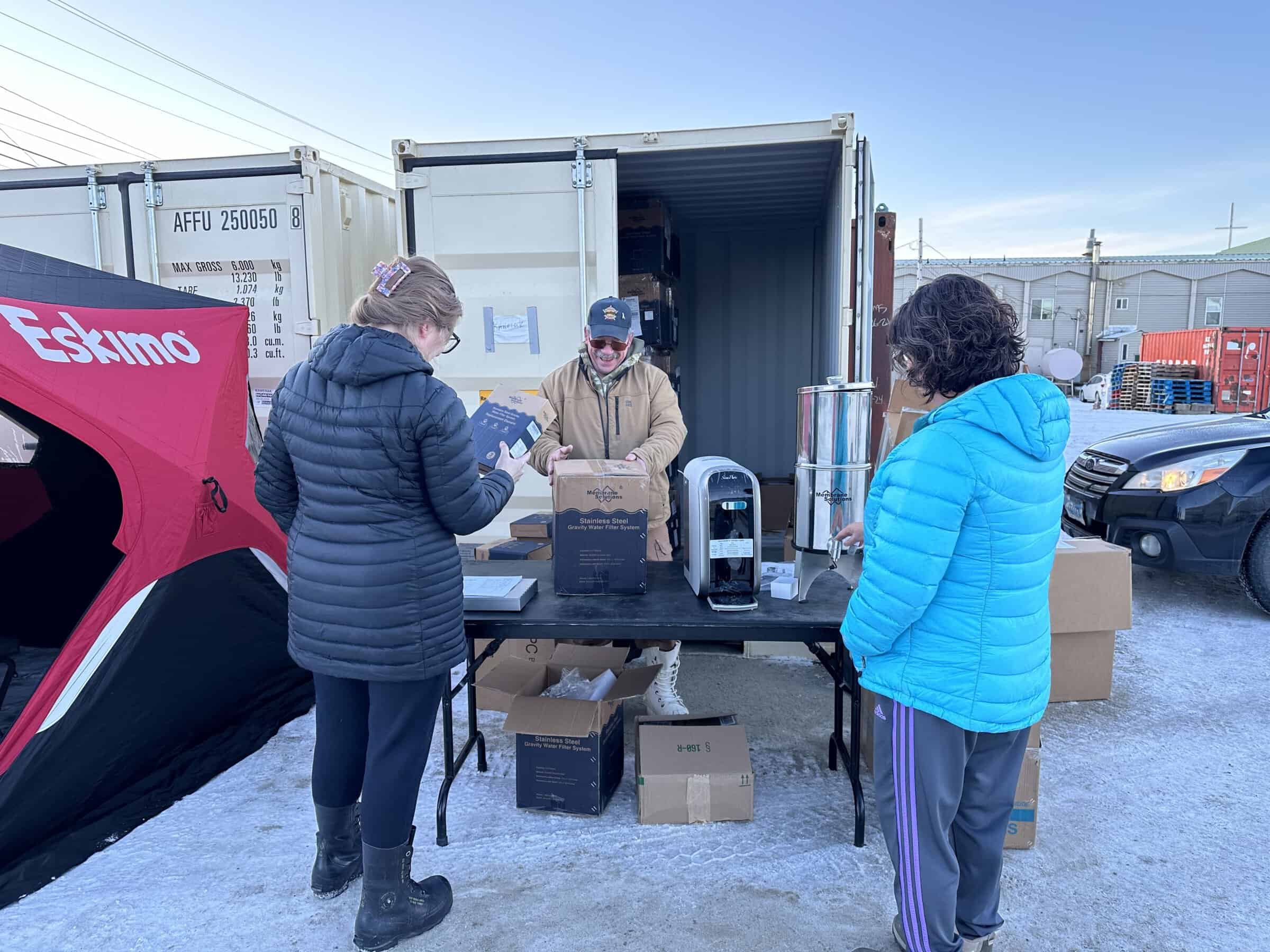
To cover the remaining 1,118 households in 11 Tribal communities, Kawerak applied for and was granted funding from the American Red Cross in the amount of $320,000. Thanks to the funding sources and community coordination, Kawerak distributed 2,170 water filter systems, one for every household within the Bering Strait Region Tribal communities and 463 reserved for Tribal members in Nome. The total of the project cost of $635,862.75. Two different models of water filter systems from SimPure were purchased, considering the unique circumstances in each community. Models included the Membrane Solutions model U3P, 2.25-Gallon Stainless Steel Gravity water filter, and the SimPure model Y7P-BW, 5-Stage countertop Reverse Osmosis Water Filter System. Communities were able to select which model they wanted (or a combination of the two), and city offices received them throughout 2023, 2024 and 2025 to distribute to all community members.
Kawerak is grateful for the donations and support of organizations like the American Red Cross to address the needs of our regional communities. Providing a water filtration systems will have multiple long-term benefits. It will benefit community members’ livelihood and health, it will free up funding to support other assistance for communities when disaster hits, and it will keep the landfill clear of unnecessary plastics.
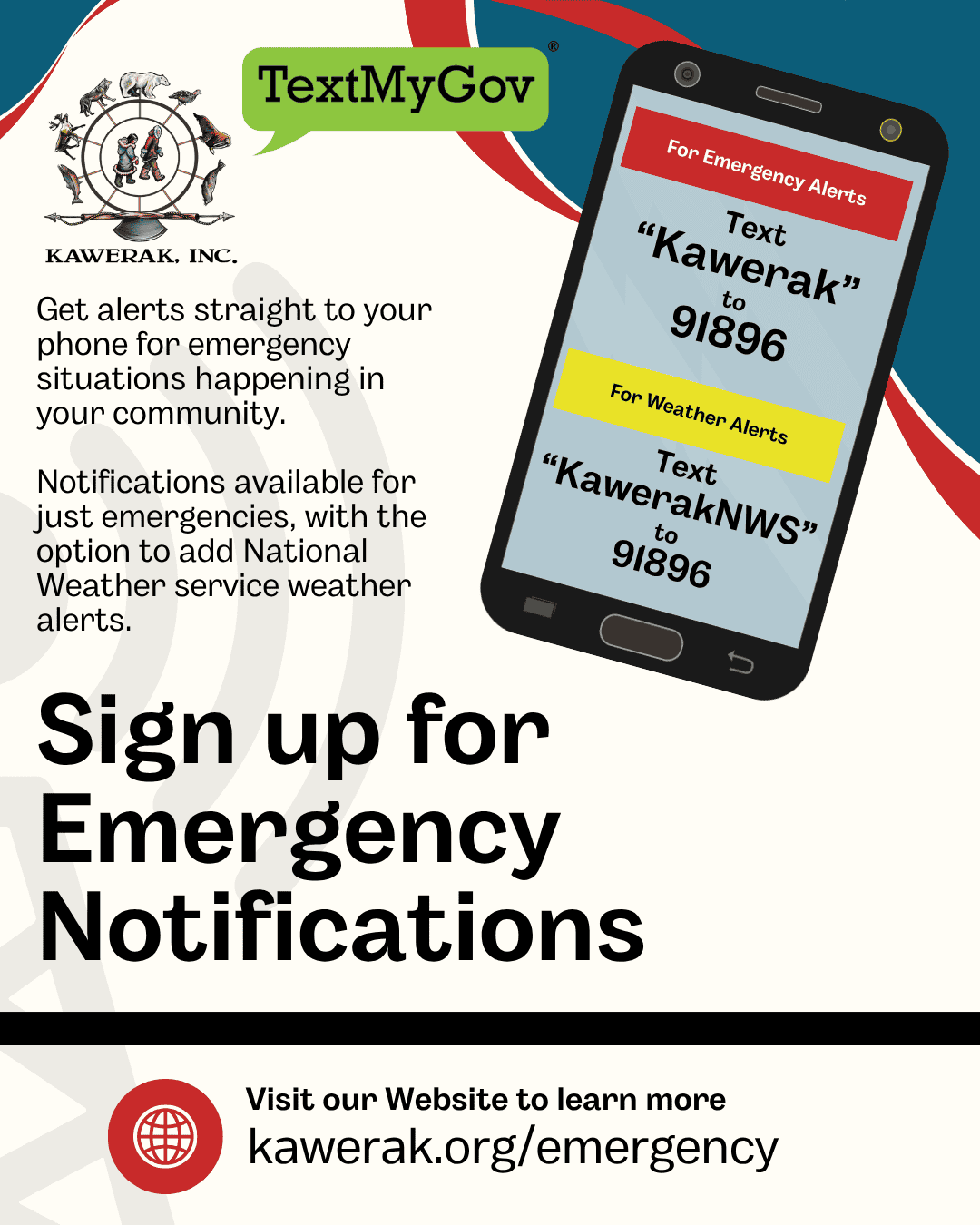
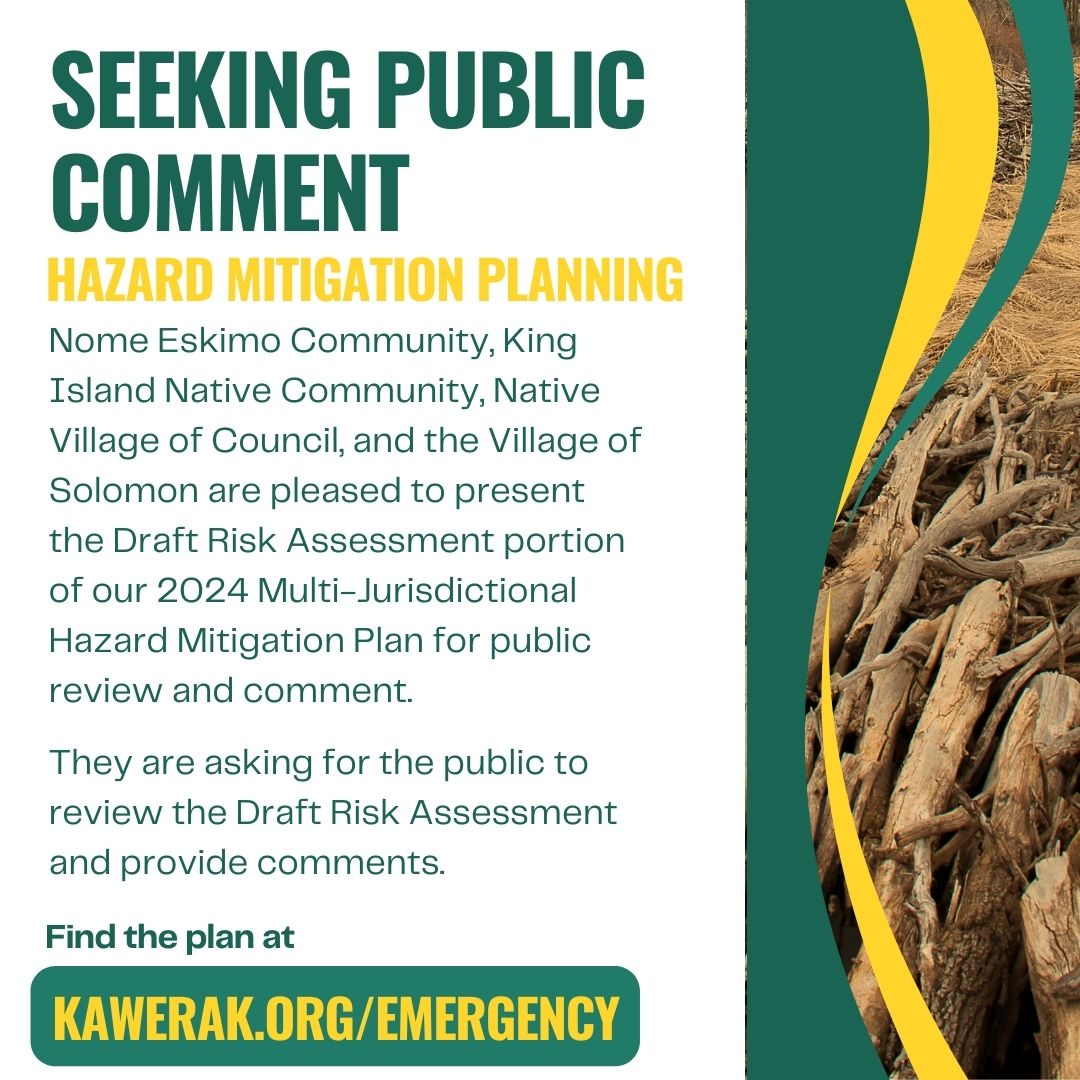
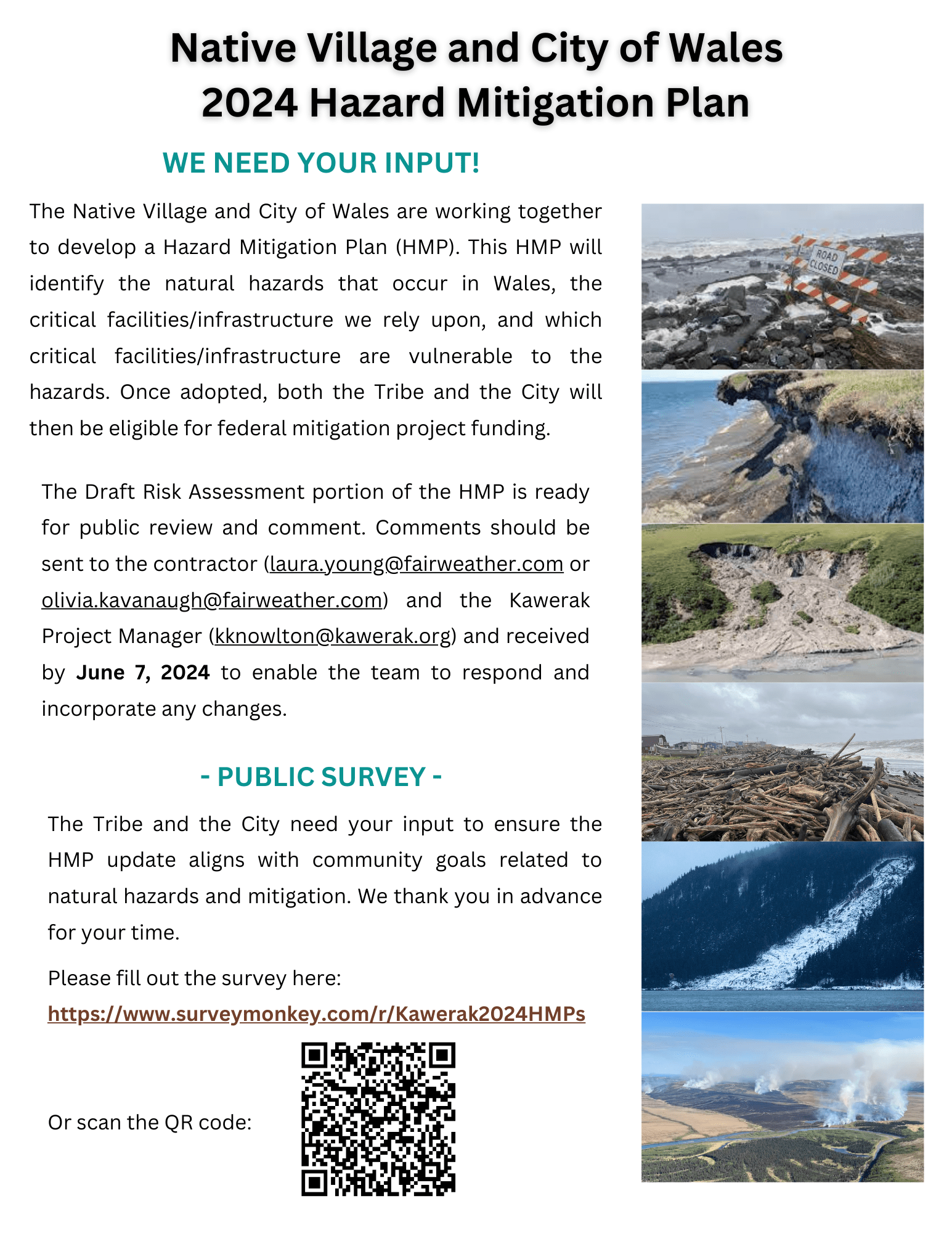
Being prepared for the future and planning ahead is why Kawerak began the Emergency Preparedness Program. With the effects of global warming on weather systems, we know we need to try to stay ahead of these emergency situations as much as possible to protect the quality of life for the people in our region.