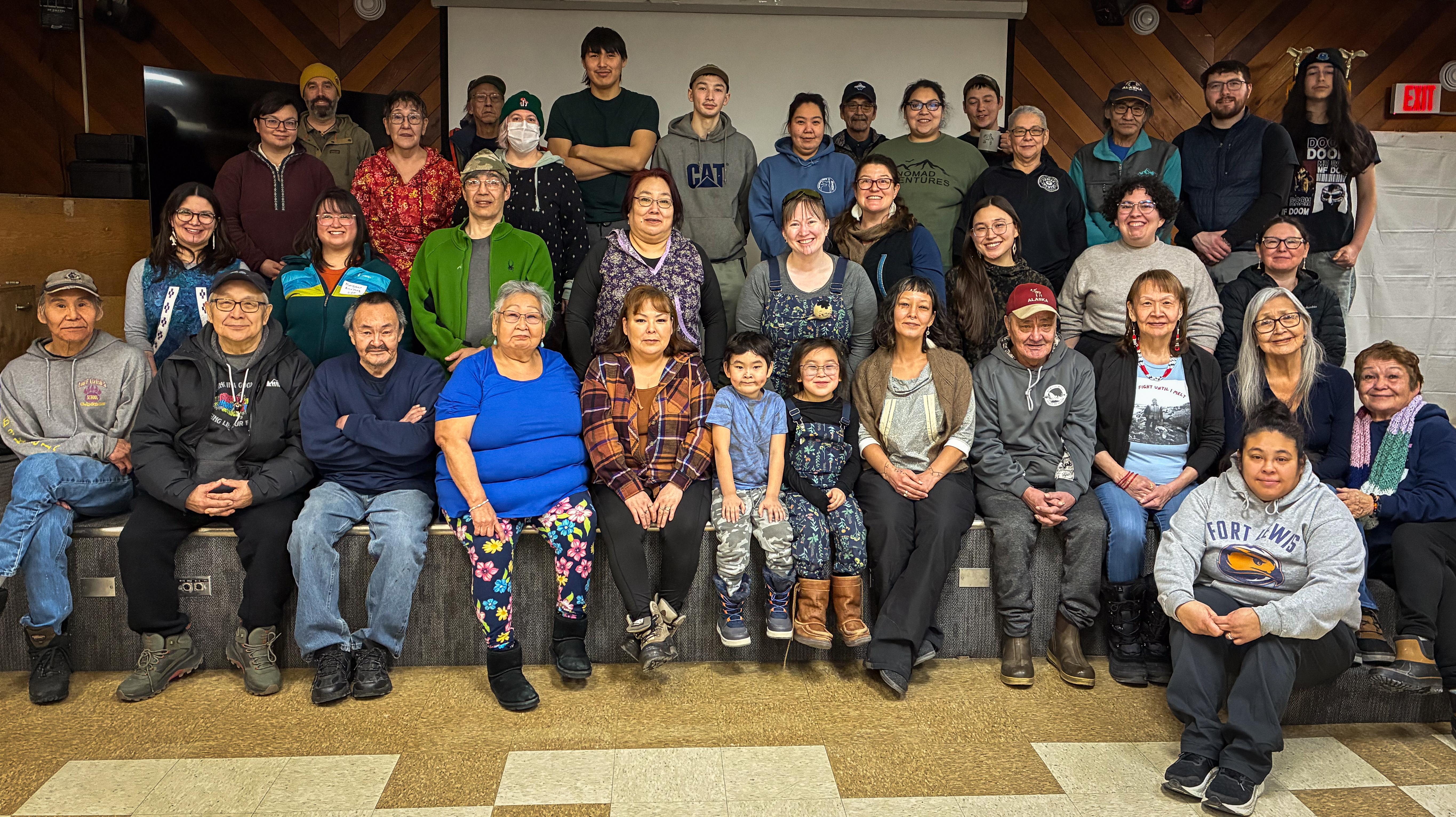
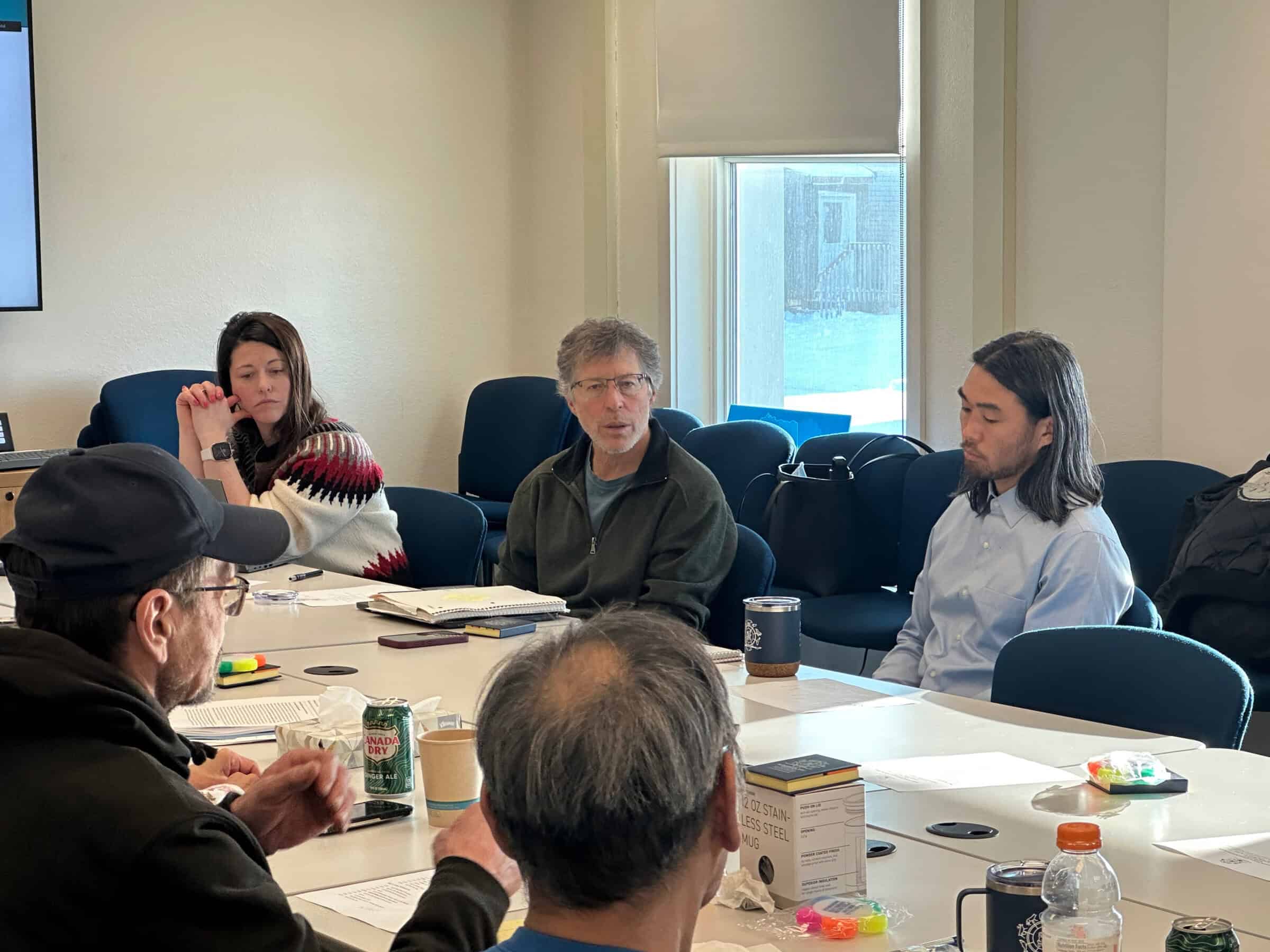
A recent February meeting gathered representatives from five regional communities on the topic of microgrids. Representatives from Elim, Koyuk, Savoonga, Brevig Mission, and Teller – along with organizational representatives and technical assistance providers from Kawerak, Deer Stone Consulting, and the National Laboratory of the Rockies (NLR) – gathered for a two-day meeting in Nome to discuss a Community Microgrid Assistance Partnership, or C-MAP, grant award from the Department of Energy and NLR to Kawerak.
Totaling $575,000, the C-MAP funding was to accompany a larger grant from the U.S. Environmental Protection Agency (EPA) Community Change program which funded development of solar energy systems within the five participating communities. Intended to support this larger project, the C-MAP funding supports business planning, maintenance planning, and development for long-term sustainability. Though the EPA grant was discontinued by the federal government in 2025 and the solar+battery project is on-hold, planning and logistics work can continue utilizing the C-MAP grant.
The February meeting was the kickoff event, joining representatives chosen by the participating communities to discuss development of operational plans and maintenance strategies to support power systems.
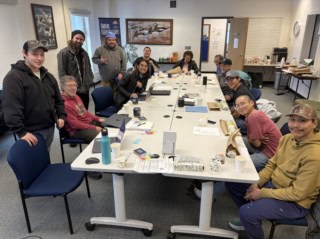
At the gathering, discussions focused on identifying energy challenges, such as generator reliability, long wait times for maintenance and repairs, and the high cost of utilities. Kawerak presented possible roles for assisting the communities’ efforts to organize and collaborate.
Attendees brainstormed ways to collaborate for improved energy reliability and resilience. Discussions also centered around workforce training and the related practical skills needed within a local and regional workforce. Communities identified the need for more locally trained linemen and bulk fuel operators, among others.
After this initial meeting, the group will meet quarterly and plan to gather again in-person at the Bering Strait Regional Energy Summit gathering in Nome, in May. Kawerak will continue to work to identify funding opportunities for alternative energy projects with an eye on supporting solar battery banks for these Bering Strait region communities. In the meantime, the communities are laying out the groundwork to support local energy production.