
EMERGENCY RESPONSE & DISASTER RECOVERY
EMERGENCY RESPONSE PLANS
CONTACT INFORMATION FOR KAWERAK RESPONSE
INFORMATION LINKS
NEW! Emergency Alert Text System Launches for the Bering Strait Region
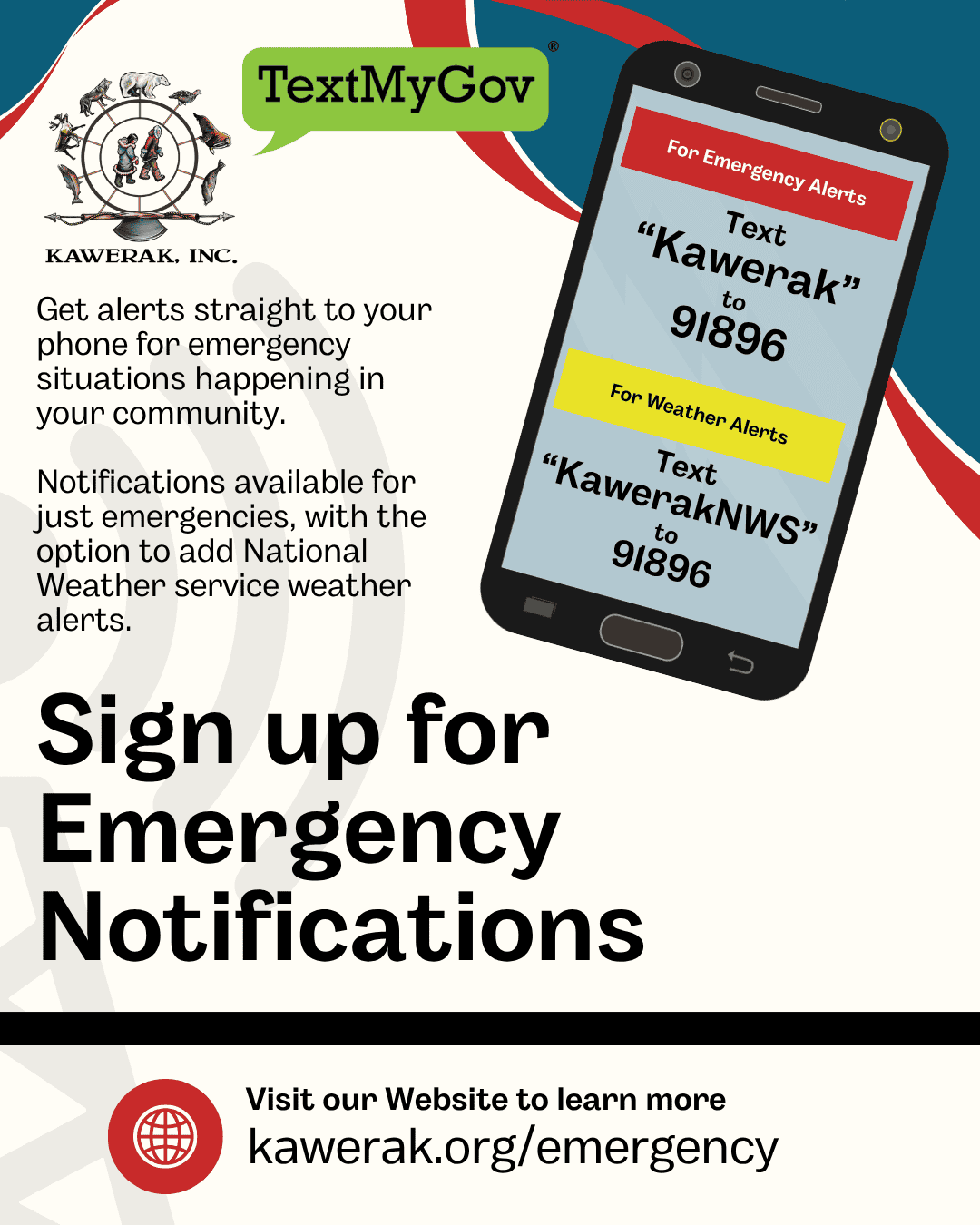
Kawerak will officially launch the new text messaging system to the public on JUNE 6, 2026. There will be two options for enrollment:
1. Receive emergency notifications only that are sent by Kawerak.
2. Receive all weather notifications and alerts sent by the National Weather Service.
Automatic Enrollment
Some residents will be automatically enrolled into the emergency alerts and will receive a text message from Kawerak on June 6th through the number 91896 initiating the service. You can choose to opt-out at any time by texting STOP.
If You Are Not Automatically Enrolled
If you don't receive the initial message, you can choose to opt-in by texting the keyword "KAWERAK"to the number 91896. After sending the initial keyword, you will be asked to reply "YES" to confirm opt-in. This service will ONLY be for emergency announcements only, that would be a threat to life or property. If you would like to also enroll into weather alerts sent from the National Weather Service for the Bering Strait Region text "KAWERAKNWS" to 91896. The process to confirm enrollment will be the same, and you can opt out at any time by texting STOP.
We are looking forward to using this potentially life-saving technology as a critical communication tool for our communities across the region. For more information visit Kawerak.org/emergency or contact Kevin Knowlton, Emergency Preparedness Coordinator, [email protected], 907-434-0789.
View terms and privacy policy info at textmygov.com/opt-in-terms-conditions. Msg & Data rates apply. Please visit: https://textmygov.com/
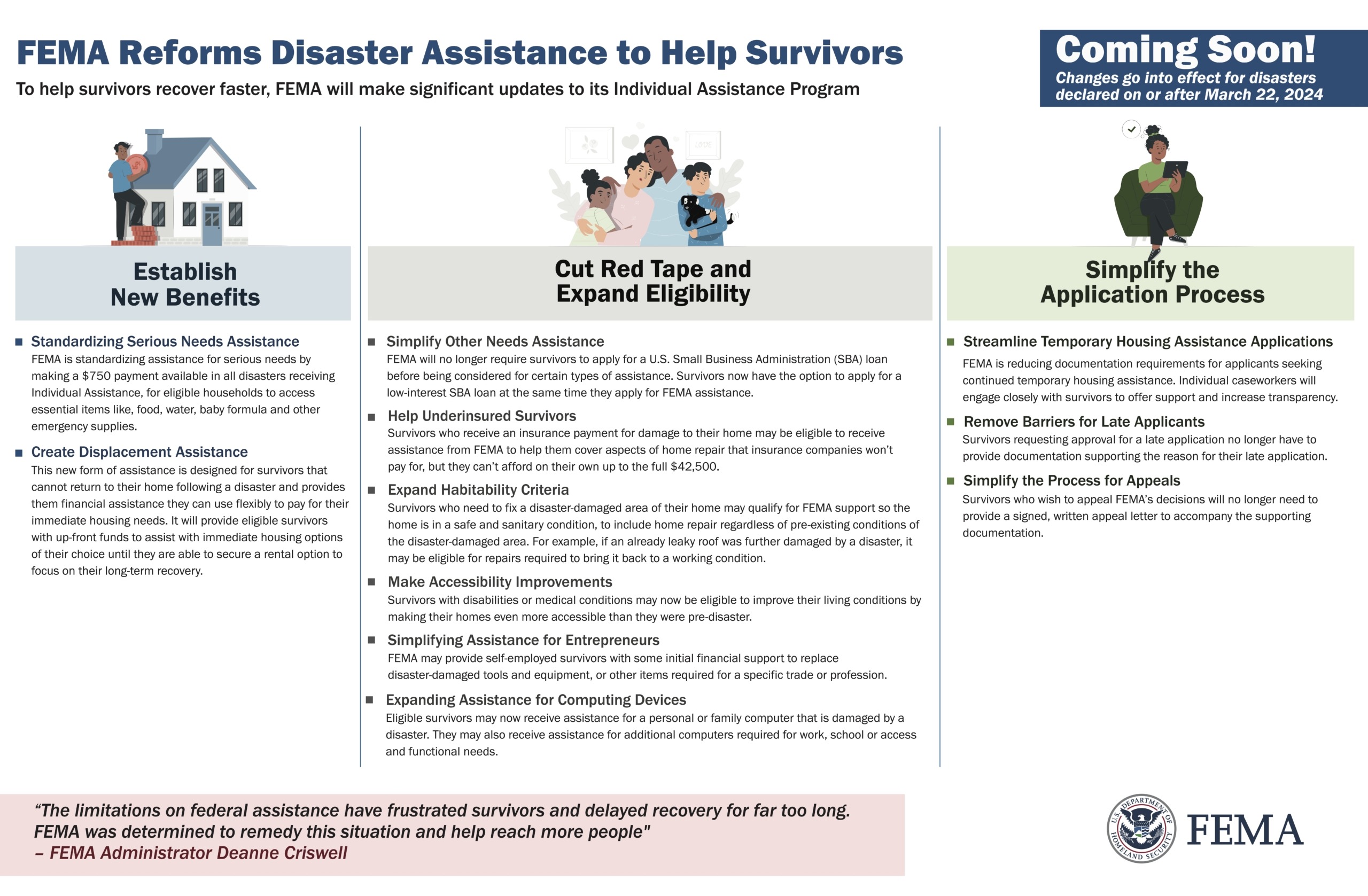
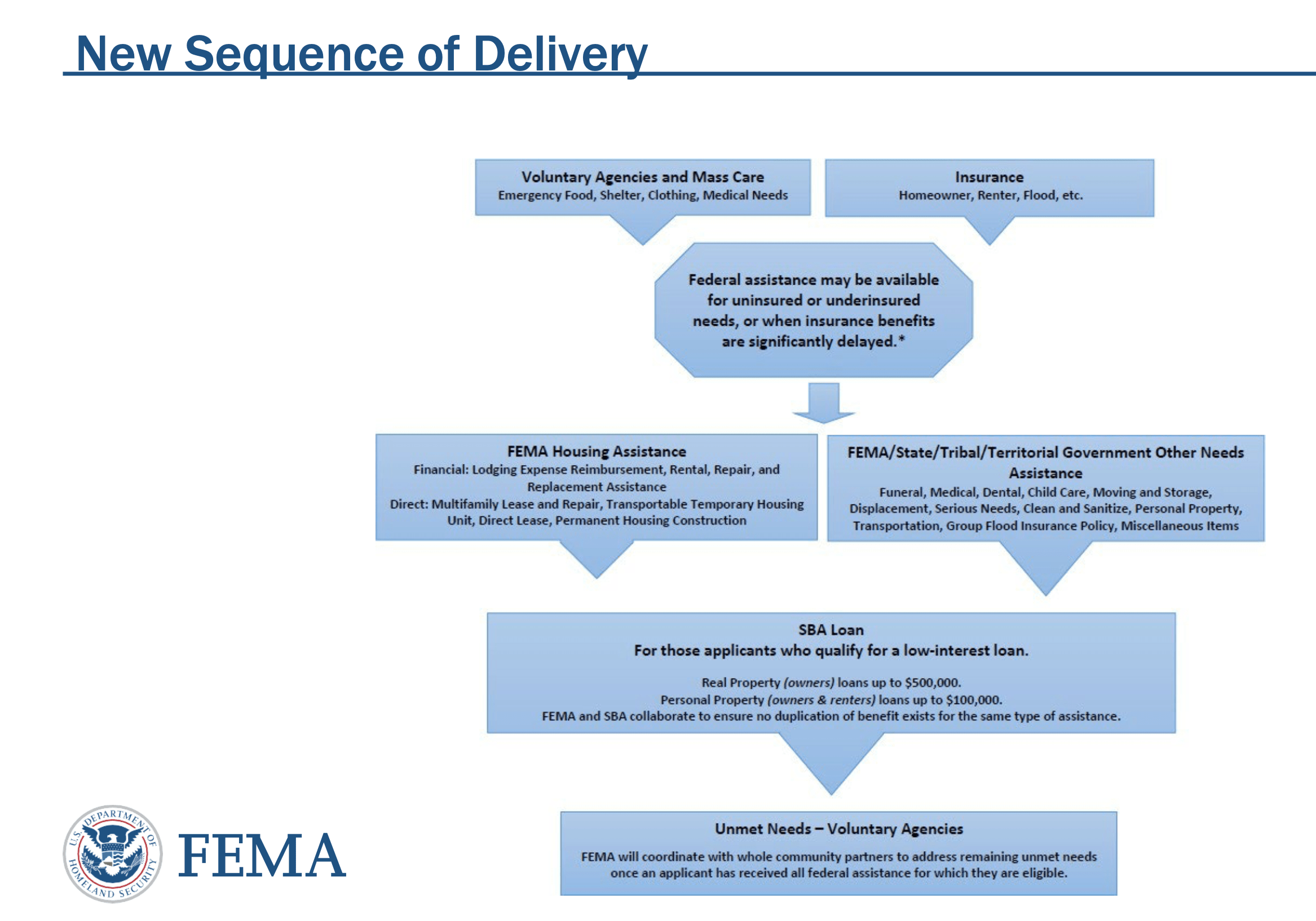
NEW! Changes to FEMA Assistance
Download the presentation:
https://kawerak.org/download/fema-ia-reform/?tmstv=1710978704
Resources for Communities
Please ensure you are working on your SCERP- Small Community Emergency Response Plan. Please download the toolkit: SCERP Toolkit
If you need more information or assistance on your SCERP for your community, please contact Kawerak’s Emergency Preparedness Specialist Kevin Knowlton at 907-443-4384 or email [email protected].
TYPHOON MERBOK COMMUNITY ASSESSMENTS
Diomede: https://kawerak.org/download/storm-assessment-diomede/
Gambell: https://kawerak.org/download/storm-assessment-gambell/
Koyuk: https://kawerak.org/download/storm-assessment-koyuk/
Shaktoolik: https://kawerak.org/download/storm-assessment-shaktoolik/
St Michael: https://kawerak.org/download/storm-assessment-st-michael/
Stebbins: https://kawerak.org/download/storm-assessment-stebbins/
Teller: https://kawerak.org/download/storm-assessment-teller/
NEW! Emergency Alert Text System Launches for the Bering Strait Region
Kawerak will officially launch the new text messaging system to the public on JUNE 6, 2026. There will be two options for enrollment:
1. Receive emergency notifications only that are sent by Kawerak.
2. Receive all weather notifications and alerts sent by the National Weather Service.
Automatic Enrollment
Some residents will be automatically enrolled into the emergency alerts and will receive a text message from Kawerak on June 6th through the number 91896 initiating the service. You can choose to opt-out at any time by texting STOP.
If You Are Not Automatically Enrolled
If you don't receive the initial message, you can choose to opt-in by texting the keyword "KAWERAK"to the number 91896. After sending the initial keyword, you will be asked to reply "YES" to confirm opt-in. This service will ONLY be for emergency announcements only, that would be a threat to life or property. If you would like to also enroll into weather alerts sent from the National Weather Service for the Bering Strait Region text "KAWERAKNWS" to 91896. The process to confirm enrollment will be the same, and you can opt out at any time by texting STOP.
We are looking forward to using this potentially life-saving technology as a critical communication tool for our communities across the region. For more information visit Kawerak.org/emergency or contact Kevin Knowlton, Emergency Preparedness Coordinator, [email protected], 907-434-0789.
View terms and privacy policy info at textmygov.com/opt-in-terms-conditions. Msg & Data rates apply. Please visit: https://textmygov.com/
NEW! Changes to FEMA Assistance
Download the presentation:
https://kawerak.org/download/fema-ia-reform/?tmstv=1710978704
Resources for Communities
Please ensure you are working on your SCERP- Small Community Emergency Response Plan. Please download the toolkit: SCERP Toolkit
If you need more information or assistance on your SCERP for your community, please contact Kawerak’s Emergency Preparedness Specialist Kevin Knowlton at 907-443-4384 or email [email protected].
TYPHOON MERBOK COMMUNITY ASSESSMENTS
Diomede: https://kawerak.org/download/storm-assessment-diomede/
Gambell: https://kawerak.org/download/storm-assessment-gambell/
Koyuk: https://kawerak.org/download/storm-assessment-koyuk/
Shaktoolik: https://kawerak.org/download/storm-assessment-shaktoolik/
St Michael: https://kawerak.org/download/storm-assessment-st-michael/
Stebbins: https://kawerak.org/download/storm-assessment-stebbins/
Teller: https://kawerak.org/download/storm-assessment-teller/